Showing posts with label book reviews. Show all posts

Monday, July 27, 2015

Adopting a New Identity for Advantage

Is it okay for someone to decide to be black, or African American? Is it okay for a black person to become white? We don't have a problem with boys becoming girls, so why have a problem with changing our race? I would hope that all people embrace themselves and love who they are, but not all people feel comfortable in their skin. I can't imagine feeling this way. But wait, we have certain rights for blacks, Native American, yellow, red and whites, ei. scholarships for college based on race, and "special" treatment by (some) police officers.

 I wouldn't mind being a black woman sometimes. They have a stereotype of, "I am a strong woman." But if a policeman pulled me over I would definitely want to be white. While shopping I would not want to be brown. White or black is good. In school, it would depend on the geographical region. In NM, being brown would be better. But being black in Utah is not. Being in a jungle fever relationship in the south, not so much. Being a white boy in Tennessee...you get the picture.

Women and men have a set of stereotypical ways they are treated by some in the work. Woman, don't be emotionally driven or else you will be looked at as a .... woman. Heaven forbid. In Interstellar Hathaway was driven emotionally and shot down for it. Brand argues in the film that love is a propulsive force, sending us in the directions we need to go. Sometimes we feel that we are tapping into that force of love; other times, it picks us up and forcibly pushes us toward the right decision or action. This isn’t unique to Interstellar; other sci-fi works ascribe much the same power to love, including the ability to manifest as a weapon and the power to induce self-awareness and evolution.
http://www.tor.com/2014/11/13/love-in-sci-fi-interstellar-speech/

Yet, men still decide to be woman and women decide to be men. Here is a quote from the 1850's.
  
And treatment in the workforce being a woman is not always equal.


Now to the racial identity part: 
And as you will read that one adopts a new identity if it is to their advantage. 


     I couldn’t help but think of Rachel Dolezal as I watched “Yellow Face” at Salt Lake City’s People Production. This winsome small theater supports African-American Theater in Salt Lake City.  “Yellow Face” should have a second run considering the unfolding of events in Spokane and the themes that are brought to light in a laugh out loud comedy directed by Kerry Lee. 
     Henry David Hwang, a Chinese-American playwright, won an Emmy in 1988 for “M. Butterfly”. He went on to write another play called “Yellow Face” in 2007 that grappled with his idea of racial identity. He used satire to reveal his comedic view of racial identity. By the end of the play it turns toward a serious question of “Who We Are”.  
     “Yellow Face” shows us how someone can accidentally take on another identity and use this to his advantage. This mixed up character hasn’t lied, yet hasn’t been truthful about his identity to his lover, friends, and employers. This may sound familiar with the headlines. However, integrity is at the base of revealing Marcus’s true identity in the play.
     Just as the sincere character in “Yellow Face” takes on Asian American rights, so does Rachel Dolezal. Can we blame her for fight for African American rights? She has a son that is half black. Her brother that she adopted is black. She has a vested interest in the NAACP.  Does that make it okay for her to take on a new identity? “Yellow Face” also address the flip side of being a racial minority. Just because Hwang is Asian, does he have to be an activist for Asian American rights?  I can’t go join a Native American Tribe and become a chief just because I identify as an Indian. Or If I was a Native American, do I have to take on an active role in bettering education on the Reservation.
     When we start pointing out who is what we are really only identifying with stereotypes. We have all done it and they have been here from the beginning but they also change.  Chinese Americans were once seen as uneducated and now they are identified as all being smart. White people can’t dance, and black can. Oops, that’s a fact. Stereotypes are funny in “Yellow Face”, but as Terri Lee has said, “They can be confusing.” Beyond the stereotypes is our heritage, we can’t erase that. It’s at our core imbedded in our soul.  
     When someone doesn’t love who they are or where they come from, that raises questions. Is it okay to choose our racial identity? If it isn’t, then why is it okay to choose one’s gender identity? Are interracial adoptions healthy for the child’s identity? If a child is in an interracial adoption, what is his racial identity?
     Cynthia Ann Parker, who was taken captive in 1836 by the Comanche, adopted the Comanche ways, and was essentially an Indian in her eyes. Did Rachel Dolezal take on another identity to survive her internal crisis of not being able to be herself? Where do we draw the line in the sand?  And Marcus G. was fooled into accepting his Asian identity in “Yellow Face”. Does that make it okay?  I thoroughly enjoyed the play and praise David Henry Hwang for being brave enough to tackle some of the themes he has in his plays, even amidst some of the uproar from his own Asian Americans. Let’s have “Yellow Face” back for another run!


Monday, December 30, 2013

The Secret Life of Walter Mitty- Short story

In the 1939 New Yorker Magazine, there is a short story by James Thurber that was turned into the new movie, "The Secret Life of Walter Mitty".

The movie was great. They added the storyline of the love life of a single Walter Mitty, but it was still good. I like the original idea that Walter was married and bossed by his overbearing wife. It gave him a reason to escape, the nagging wife. Read the short story in the The New Yorker.
 
Biography.com
James Thurber was an American author and cartoonist best known for his contributions to The New Yorker magazine. He was on The New Yorker staff from 1927 to 1933 and remained a consistent contribution thereafter. His cartoons became some of the most popular in America. By 1952, Thurber had to give up drawing because his failing eyesight had developed into full blindness.

Saturday, April 27, 2013

The Alchemist

I loved the book. Santiago was a wonderful character that "followed" his destiny. Through conversations a couple of days ago I heard a woman say that she was going to wait to get married because of "The Alchemist." She said had Santiago gotten married he would have never found the treasure. Was "The Alchemist" about waiting to get married and finding your treasure, or following your destiny? I am sure you can see my point of view. If this poor girl waits around to get married and never finds her treasure because all along her destiny was to get married. Who knows if her treasure would have been a husband and/or child/children? Whether or not you get married, you can still follow your destiny. It will FIND you if you call it.
File:TheAlchemist.jpg
Santiago's destiny was to travel and to be enlightened. It was a different time period. Today, there is people that can't travel, and people who can. If you have the desire to travel, you can find a way.
I think that so many people look to books, movies and other people to tell them what they should be wanting...when all along they needed to simply look to themselves. People vacillate too much in our world. Make up YOUR mind and follow YOUR destiny. That is what  "The Alchemist" was about to me.

Friday, January 25, 2013

Debby Dahl Edwardson

Debby Dahl Edwardson is an author is far northern Alaska! I recently discovered her website and fell in love with her topic and motivation to write: Young Children of an aboriginal People the Iñupiat.

In all honesty I started studying the People of the Far North when it didn't fit my story for the North American Tribes to meet up with the Vikings. That was when I learned about the Inuit and have been studying them ever since. They are an interesting people and a very different culture. I think it has to be to be able to survive in their world. It is just that, like another world. And then again it isn't so different. They have the same problems we have, the same insecurities and joys of children. It is sometimes when we see the differences in people, that we realize we aren't so different. 

I used the Inuit in my story and had searched for books about them. I think that my husbands tribe, the White Mountain Apache, could relate to this story. The older generations were shipped off to BIA schools. Children need literature that is about their people!  

It frightens me that that people and publishers are saying that fiction is being taken out of schools. The core curriculum focuses on non-fiction. I asked my fifth grade son's teacher what books they would be reading in class and she said with the core curriculum there is no time to read fiction literature. I think it is up to the teacher to make time. I know that NJ has been following the core curriculum and they still found time to read wonderful fiction stories like, "Coraline" by Neil Gaiman, and "The Family Under the Bridge" by Natalie Savage Carlson. 

I just ordered her book, "MY NAME IS NOT EASY." 
BOOK REVIEW WILL BE POSTED...

This is from her website about the book. It was a National Book Award Finalist in 2011!

"The elders say the earth has turned over seven times, pole to pole, north to south.
Freezing and thawing, freezing and thawing,
flipping over and tearing apart.
Changing everything.

We were there.
We were always there.
They say no one survived the ice age but they’re wrong.
There were seven ice ages and we survived.
We survived them all . . ."


"Debby Edwarson’s My Name is Not Easy brought me to tears as I remembered the loneliness and confusion I felt when I left my home and family in Arctic Alaska for boarding school thousands of miles away. This young adult novel evokes a time and place in the Alaska Native World that is important to remember, when far off governments and powerful institutions made decisions that began to change our world, challenging us to find new ways to survive. It is an excellent work of fiction with important truths to be remembered."

Wednesday, January 23, 2013

10 Year old Rates Books 2013

I have a ten year old that is not as big of a reader as my others. But, he saw the other kids reading and has kept it up. I remember my 17 year old reading Captain Underpants when he was in third grade. Now, he is just busy doing homework.

Back to my 10 year old...His Numero Uno (Number one) series of all time is "Diary of a Wimpy Kid."


Thanks to Jeff Kinney. I am so happy that this silly, true to life can keep my 10 year olds attention in a technology age of X-box and I-pods! Truly, I am soooo happy!

I tried introducing him to Harry Potter.


 I introduced him to Micheal Vey, which is a fast pace book....


NO GO. He kindly told me after trying to read Michael Vey that it was confusing. I totally understand that. I can't stand confusing books. In fact, I just tried to read James Joyce and that was the hardest book I have tried to read in a long time!
So, I was in Costco and an author was doing a signing. I am a sucker for author signings. I bought it and turns out, it is his next favorite, next to Diary of a Wimpy Kid!
Cobble Cavern! By Eric Olsen


Thanks Erik Olsen for writing another exciting and non-confusing book for my 10 year old. We will be buying the second one.


Tuesday, January 1, 2013

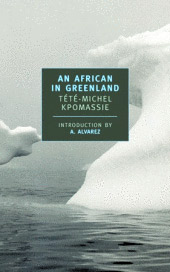
An African in Greenland


An African in Greenland

This book is the truth about Greenland I was looking for. It is from the 50's, so all things considered, it is shocking what went on in the fifty's.
Michel the Giant is an amazing man with the desire to get to Greenland as a boy. He does it and wants to learn everything about these Inuit. He dives right in with out judging their inebriated lives. I like his writing as much as Knud Rasmussen. He did this with little education and pure curiosity.
Others that have read it said they wanted to hear more about Africa, he does tell a little, and it is VERY interesting. But I got the book to learn about the Inuit, not an African. Most of all, I wanted an African's perspective on Greenland. I am half way through and have enjoyed it greatly! I love how somebody else's knowledge is used to inspire another work. Inspiration is what keeps the world going round!

Tuesday, December 11, 2012

Ayana Mathis Simple Biography


“I had this idea that to be a good writer you wrote these pretty sentences,” Ms. Mathis said. “The biggest thing I learned at Iowa was that being a good writer has everything to do with telling a truth about what it means to be a human being.”


She was grew up with a single mom that came to Germantown Philadelphia. She heard stories of her family, but put the pieces together in this work of fiction. I look forward to reading it.

NY Times Article Click here for the whole article


Ms. Mathis grew up with a struggling single mother and supported herself over the years as a fact checker for magazines. She began writing fiction only a short time before getting into the Iowa Writers’ Workshop three years ago.
There Marilynne Robinson, the award-winning novelist and essayist, became her teacher, thesis adviser and mentor, putting her in touch with an agent who quickly sold her book to Knopf.
“In cases like hers it’s almost like encouraging a colleague rather than teaching a student,” Ms. Robinson said in an interview. She recalled how Ms. Mathis would quietly show up at her home to read her books on theology, one of her interests. “She’s kind of a force of nature, in a thoughtful and elegant way. I think she’ll make a wonderful public presence. She just has this strong sense of life. All the intelligence in the world doesn’t turn into much unless you have that.”
“The Twelve Tribes of Hattie” was written in Iowa in just under two years, after Ms. Mathis abandoned a fictionalized memoir that never jelled. The 243-page novel tells the story of Hattie and August Shepherd; their 11 children and one granddaughter make up the 12 tribes. They are part of the Great Migration that brought waves of African-Americans from the terror of the South to the promise of Northern cities.
Each chapter has a date (from 1925 to 1980) and focuses on one or more members of the Shepherd family. It begins with the firstborn twins, Jubilee and Philadelphia, so named because of their mother’s journey from Georgia to Philadelphia. But the babies die, Hattie’s soul withers, and she turns bitter and unloving.
That lack of love, as well as other travails, causes suffering to ripple through the generations. One daughter, Cassie, has a mental illness. Six, a child preacher, is scarred emotionally and physically. Floyd is a musician forced to hide his homosexuality.
“Ms. Mathis has a gift for imbuing her characters’ stories with an epic dimension that recalls Toni Morrison’s writing, and her sense of time and place and family will remind some of Louise Erdrich, but her elastic voice is thoroughly her own,” Michiko Kakutani wrote in her review in The New York Times, one of several early raves for the book.
Ms. Mathis was an only child whose parents separated when she was around 2. She grew up mostly in a working-class section of the Germantown neighborhood in Philadelphia. Her mother struggled with depression and they moved around a lot, she said. Her mother was also extraordinarily loving and stressed her daughter’s potential, Ms. Mathis said.
“I grew up very much with my mother, and not my extended family, but I grew up with snippets of stories about my family and they became of mythic proportions,” Ms. Mathis said of the novel’s genesis in stories about her mother’s dead sibling or an uncle haunted by the Vietnam War. (Still, most of the book is totally imagined, she said.)
“Twelve Tribes” started out as three separate stories about three of the characters in the novel, but her best friend, Justin Torres, also a novelist, helped her realize that she had the makings of a novel. She decided to create a tribe of 12, an allusion to the biblical Jacob’s  12 sons.
“This people who came out of the South did build a new nation in the North and changed our country, politically, culturally, in all ways,” she explained.
Still, Ms. Mathis said she was not interested in simply documenting the phenomenon of the Great Migration nor focusing only on the scars and horrors of racism. She wanted to get at the emotional complexities of her characters.
“I set out to write a novel about an in-between generation — from the Great Migration to civil rights — and people suffering from a kind of mother-want and grappling with their own demons and psychology,” she said. “I also set out to write a novel about family, but being alone.”
Still, it took Ms. Mathis a long time to find her voice and her way. She attended New York University, Temple University and the New School without earning an undergraduate degree. “I sort of wandered off,” she said. She took writing courses and mostly wrote poetry, never considering herself a fiction writer. An avid traveler, she even ended up living in Italy for four years, learning the language and acquiring some cooking skills.
A year or so after her return to New York she found her way to a private creative writing class taught by Jackson Taylor, a novelist. She was still bouncing around at fact-checking jobs. “She came to the class with the skills of the magazine — deadline, fluidity, structure,” Mr. Taylor said. “But then she blossomed in a forum where she could explore and explode her poetic gifts.”
She also met Mr. Torres in that class. When he took off for the Iowa Writers’ Workshop, it prompted her to apply.

Friday, November 16, 2012

Curse Words in Writing

If you have ever read "Under the Never Sky" by Verionica Rossi, there is one character that is referred to this way: "....and he cursed". I read this at least 15 times for the same character. If I read it one more time I may curse! Needless to say,, I was glad that the author didn't put in curse words, probably because she would limit her audience, but couldn't she come up with something else besides..."...and he cursed".  Other than that it was a great book, with great story (and I really actually liked the character that cursed a lot.)
In the Children's Writer, December 2012 Issue (I get it now because I entered two short stories!) I have enjoyed it and found this helpful:

By Veda Boyd JonesMy friend Brendan, a brand-new teacher, sat at my dinner table complaining that a novel for junior high readers was totally unrealistic.
    “There’s no way a juvenile delinquent would talk like that. His language would be full of words like  *!&**## and $^*&$* and %(^*#. (Substitutes are mine.) Your ears would turn blue if you heard the kids talk in our school hallways, and they’re not in trouble with the law.”
   “That may be,” I said in the tone I reserve for talking to young friends I have known since their birth and who should not be cussing in front of me, “but the first reader of a novel is an editor and once it’s in print, the next readers are reviewers and librarians, and they are not going to buy a kids’ book full of profanity. And I won’t even address the role of irate school boards.”
    “But it’s not right,” he said.
    “It’s not accurate, but that’s where substitute fricatives come in.”
    “Fricatives?”
    “Phooey. Don’t tell me you’ve never heard of fricatives? Shoot, they’re such wonderful words.”
What the Fricative?In the gentle way I have of talking to know-it-all whippersnappers the ages of my sons, I explained about aggressive consonant sounds (p, f, b, d, k, sh, etc.). When you say them, parts of the vocal apparatus (lips, tongue, teeth, and palate) block air and make you push it through a narrow gap to make the sound. Forcing the air out causes friction, thus the name fricative. Once you get one of those suckers out, you feel immensely better. Our best curse words contain fricatives.
    Of course, there are technical terms for each of the five combinations of vocal apparatus that constrict the airflow, but I did not flaunt that knowledge to the kid.
~ The lip and teeth combination makes the f in fire and the v in very.
~ The tongue and teeth combination makes the sound th in math and this.
~ The tongue and alveolar ridge (the ridge behind the upper front teeth) combination makes the sin say and the z in zebra.
~ The tongue and palate (roof of the mouth) combination makes the sh and zh sounds in shoe,machine, azure, and rouge.
~ The glottis (the area of the windpipe behind the tongue) makes the sound of the h in happy andhello.
    Note, these examples are not bad words (well, math may be to some people). But the tone we use saying them may help us express our attitudes and emotions.
Frankly, My DearMy librarian friend Carolyn, an expert on Margaret Mitchell’s Gone With the Wind, says that the movie folks added the punch to Rhett’s farewell speech to Scarlett when they added the word frankly to Mitchell’s dialogue.  In “Frankly, my dear, I don’t give a damn,” it is that wonderful fricative f in franklythat stings.
    Carolyn swears that scientific studies have been done that prove using fricatives causes the part of the brain called the amygdala to jump into action, flooding the senses with hormonal superpowers. The conclusion of more than one study: People who swear reduce their stress and heighten their pain tolerance.
    Why not run your own little scientific test? Hit your left thumb with a hammer, and say, “That frickinghurts!” Then hit your right thumb with the same hammer (for a controlled study) and say, “Oh, dear, it hurts!” Really, which felt better?
    Of course, Carolyn pointed out, nobody beats William Shakespeare when it comes to using colorful language, and he created effective phrases without stooping to words that would be banned in print for middle-grade students. Take Queen Margaret calling Richard III to his face a “poisonous bunch-back’d toad” (Richard III, Act 1, Scene 3, line 247). And there is one of Falstaff’s fellow drinkers calling other drunks “these mad mustachio purple-hued maltworms” (Henry IV, Part 1, Act 2, Scene 1, lines 74-75). In another example from Henry IV, Prince Hal calls a tradesman a “leathern-jerkin, crystal-button, not-pated, agate-ring, puke-stocking, caddis-garter, smooth-tongue, Spanish pouch” (Act 2, Scene 4, lines 68-70). 
    Today’s children’s writers could replace cuss words with fricatives in a humorous way with more up-to-date language. I asked my Wednesday lunch group writers for examples of fricatives, and we sat around the table swearing like sailors in friendly language: from son of a biscuit eater to dagnabit to simple words like fudge, shucks, and featherhead. One writer reminded us that a current phrase used by kids when aggravated in the presence of adults is shut the front door.
    There are tons of possibilities for giving characters words they could use for fun and as an outlet for their frustrations that will pass that first editor’s desk. Be as creative as the Bard, that sour-pussed, fret-minded Brit.

Tuesday, October 30, 2012

INUK : A Foreign Film

The most difficult journey is the one you must make within yourself
Why am I so obsessed with this film? Because it takes place in Greenland, has to do with foster kids (or kids in a children's home), was filmed using the kids from the Children's home, and I WANT TO SEE IT!
It played in Washington D.C. a couple of days ago at the Native American Museum! I wished I was still living in NJ so I could have gone down to watch it!
If you go to the website, you can watch a trailer. I also almost bought it before it was voted as best foriegn film, all I had to do was donate $100. I decided I couldn't spend that much. Now I can't find that webpage :(
http://www.inuk-lefilm.com/FR/Accueil.html

Friday, December 30, 2011

A Discovery of Witches By Deborah Hackness


Are we sick of Vampire stories? While Stephanie Meyers opened up a new world to readers with her eclectic vampire story, we now have Deborah Hackness with her connoisseur of European History. (and other bits of knowledge.) Not all information comes from the internet, some comes from the good ol' library.

Friday, December 2, 2011

The Artist who Painted a Blue Horse


http://www.npr.org/2011/10/07/141156535/excerpt-the-artist-who-painted-a-blue-horse

Enjoy an excerpt from Eric Carle's latest Book. It is very cute for that aspiring artist or teaching, what is an artist?

Monday, August 22, 2011

Submission Results!

I got my very first REJECTION letter! I was so excited. (not really) I can say, "I have one." It was rejected because it does not suit thier current needs. It wasn't missing a plot. There wasn't to many errors. And the story wasn't scattered.
On to my next endeavor. I can't wait. It will have to be a suprise because, well...because suprises are best. I have one new child's book I will submit soon and I am working on a novel, fiction (12 and up).
I am currently working on moving to New Mexico, so that is soaking up my time.
I picked up a book for my son upon his request:
"Do you want any books from the library? I am going today."
son: "Yah, pick one from the author of The Notebook."

I see the new fiction book section and it is by that guy, Nicholas Sparks. It is his newest book, Safe Haven. The only problem is they only have two copies in the large print and nothing else.
I bring it home for him and he takes one look at the large print and gets a headache. I pick it up with no desire to read it and skim throught the first third and begin reading it. I told him it is probably a good thing he did not read it because it is not the sweet love story that Sparks usually writes. It was a little dark compared to his movies I have seen. Suprisingly, I never read any of his books before.
I compare it to the corny "woman runs away from wifebeater husband" movie you turn on and can't turn off. You know how it is going to end and you know you could be doing something else, but you keep reading. I finished it in five days.( I have six kids right now).
It did have a suprise at the end that gave it the nice Nicholas Sparks twist that I like. My favorite is still The Notebook.