Showing posts with label research. Show all posts

Wednesday, January 30, 2013

The Inuit Facts

Facts about Inuit Groups:

http://www.thecanadianencyclopedia.com

There are eight main Inuit groups in Canada, the LABRADOR, UNGAVA, BAFFIN ISLAND, IGLULIK, CARIBOU,NETSILIK, COPPER and Western Arctic Inuit (see NATIVE PEOPLE, DEMOGRAPHY). The Western Arctic Inuit (or Inuvialuit) are recent immigrants, or their descendants, from Alaska, taking the place of the MACKENZIE INUIT, who were decimated by several smallpox and influenza EPIDEMICS at the turn of the century. The SADLERMIUT, in northwestern Hudson Bay, died out following contact early this century ( see NATIVE PEOPLE, HEALTH).
All of the Canadian Inuit speak one language, Inuktitut or Eskimo-Aleut, though there are six different dialects (see NATIVE PEOPLE, LANGUAGES). However, because of improved travel opportunities and the development of Inuit-language radio and TV programming, language differences are diminishing (see COMMUNICATIONS IN THE NORTH; NATIVE PEOPLE, COMMUNICATIONS). Traditionally, there was no written language, but after contact with missionaries, writing systems were widely adopted. Since 1920 the adult literacy rate has been almost 100%.


Ivalo Qumangaapik


Ivalo Qumangaapik

Ivalo Qumangaapik, an elderly Inuit woman wearing thigh length women's kamik (boots) sits on her front step. Qaanaaq, Thule, Northwest Greenland. Stunning Photo Gifts From ArcticPhoto


Inuit hunters in their kayaks on a narwhal hunt in

Inuit hunters in their kayaks on a narwhal hunt in

Inuit hunters in their kayaks on a narwhal hunt in Inglefield Bredning. Thule, Northwest Greenland.. Stunning Photo Gifts From ArcticPhoto


August Eipe at his home in Qaanaaq with his wife Birthe


August Eipe at his home in Qaanaaq with his wife Birthe

August Eipe at his home in Qaanaaq with his wife Birthe and their children Gideon & Jahanne. Thule, Northwest Greenland

Inuit boys play on a swing in the summertime at Qeqertat

Inuit boys play on a swing in the summertime at Qeqertat

Inuit boys play on a swing in the summertime at Qeqertat. Thule, Northwest Greenland. Stunning Photo Gifts From ArcticPhoto

Monday, January 7, 2013

Children's Book Buying Market

YA- More than half the consumers of books classified for young adults aren’t all that young. According to a new study, fully 55% of buyers of works that publishers designate for kids aged 12 to 17 -- known as YA books -- are 18 or older, with the largest segment aged 30 to 44, a group that alone accounted for 28% of YAsales

where I got this

this graph is 2011, two years old.

Slide3

where I got this information

With this all said, it seems that the marketing is directed at the non-hispanics/ whites.
I would like to quote my 10 year old.
Me: Would you read a book about a black boy?"
Him: Yeah, black kids are cool!

There you have it.  Denzel and Will Smith can successfully pull off a wonderful box office hit because it is not just blacks going to see their movies. Just as it would not just be black reading a book about a black boy.

As for the Native American aspect of readership, it isn't even on the graph. But Sherman Alexie pulled off being a best selling author with his "The Absolutely True Diary of a Part-Time Indian". 

Saturday, January 5, 2013

Where is the Black Hero in Literature for Teens?

Disclaimer:
I am not suggesting there are race problems in America. In fact, we need to realize there is less racism than we think. Focus on the good. An interesting book on American view on race is :  Negrophilia: From Slave Block to Pedestal—America's Racial Obsession

I love literature. I love heroes and heroines. I once had a foster child that was two years old from Liberia. He was with us for two years. The one thing I wished he had was a black hero to look up to. At the time children had Harry Potter, Alex Rider, and most Super Heroes are Caucasian i.e. Spider-man, Thor, The Hulk. We need a black hero!

Our little boy stayed with us for two years and forever changed our lives and the way we look at the lives of others. I stay in touch with him and talk to his mother over the phone on Tango. She shares stories from Africa and shares that she misses Africa. She has been in the United States since about the age of 10 and still misses Africa! This surprises me because everyone wants to come to the United States, right? The United States isn't everything if you don't have help and support or family. She misses her family most of all. She said in Africa they help each other- in American we are expected to do everything by ourselves. This is hard for a single mother!

I now have a African American girl I have adopted. Her roots are in Louisiana and Cuba. The history of Cuba and blacks is very interesting and another story. But, her roots are now with us. And I want her to love herself for her differences i.e. kinky hair, brown skin, wide nose, full lips and a beautiful round bottom!
I don't want her to desire straight hair, fair skin, or less of her body. She is beautiful and I want her to love herself. I love every thing about her curled eyelashes to her brown toes.

The one thing literature is missing is a good black hero and/or heroine. My story did not begin with, "hmm...how can I have a black hero." It came about very naturally and I like it that way.  I started with my husbands roots, Native American. He is Apache, but I have chosen the Inuit of Greenland. The suicide rate is another story and I would like to work that into the novel. Greenland has the highest suicide rate in the world. I have heard once that you don't want to have one of each race in your story. Well, I have broke that rule. I have an African, an African American, Inuit, and a stuttering Caucasian. I love my story and know that others will too.

Our next generation is much more open about race and difference. Sometimes I feel that Caucasian families are taught to not look at color- color blindness. Instead, we should notice color and embrace it. We can't pretend we are all the same color. We are different and it is why we are beautiful. Having one of each character fits this generation because that is what is at school. There is more integration of races at school, they have friends of different colors and there should be one of each!

One other fact is that foster kids are an enigma to other kids. No one wants to say, "hey, I am a foster kid." We are afraid of what we do not know. Hopefully, other kids would not have such a stereotype for foster kids or fear them.

Statistics:
Foster kids facts

Every year, approximately 30,000 young people leave the foster care system without lifelong families – most at age 18.
There are more than 400,000 children and youth in the foster care system. 

Young adults aged 18 to 25 with serious psychological distress were less likely than other adults with serious psychological distress to have received mental health services: 29.4% of those aged 18 to 25; 47.2% of those aged 26 to 49, and 53.8% of those aged 50 or older with past year serious psychological distress received mental health services in the past year.

In fact, data from the Adoption and Foster Care Analysis and Reporting System (AFCARS) show that between the ages of 8 and 9, the probability that a child will continue to wait in foster care exceeds the probability that the child will be adopted. Further, the number of children in this older age group is growing, now representing almost half of the children waiting to be adopted nationally.

New Jersey's facts of Children awaiting adoption: Mostly Black for the state of NJ.
click here

2011
Alaska Native / American Indian<.1
Asian 0.3
Black 47.7
Native Hawaiian / Other Pacific Islander<.1
Hispanic (of any race)18.3
White 24.6
Two or More Races 4.4
Unknown 4.5
Missing Data 0.0


Tuesday, January 1, 2013

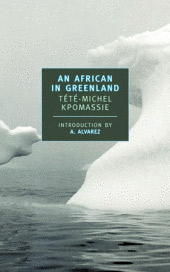
An African in Greenland


An African in Greenland

This book is the truth about Greenland I was looking for. It is from the 50's, so all things considered, it is shocking what went on in the fifty's.
Michel the Giant is an amazing man with the desire to get to Greenland as a boy. He does it and wants to learn everything about these Inuit. He dives right in with out judging their inebriated lives. I like his writing as much as Knud Rasmussen. He did this with little education and pure curiosity.
Others that have read it said they wanted to hear more about Africa, he does tell a little, and it is VERY interesting. But I got the book to learn about the Inuit, not an African. Most of all, I wanted an African's perspective on Greenland. I am half way through and have enjoyed it greatly! I love how somebody else's knowledge is used to inspire another work. Inspiration is what keeps the world going round!

Saturday, November 3, 2012

Research

I just posted a number of past posts that I saved as drafts because I was not sure if I was going to use the information and I wanted to document where I got all my research.

A few books I have read is the "Vikings: North Atlantic Saga" published by Smithsonian Books. For obvious reasons I read this one.

"The Shipwreck" By Jorn Riel. I learned about him from the Isuma TV website and love his children's early chapter book about a viking boy who finds two Inuit children. His book was hard to get here in the US. I look forward to reading the other books to follow in the Quartet.

"Windswept Dawn" William Heinesen.  I found this book early on while I was infatuated with the Feoroe Islands. It was a good book. All of these should show up to the right on the "Books I've read"

The latest book I just requested from the Library is: "Lost in the Barrens" by Farley Mowat. I will post about that one after I read it.

I am so grateful to other authors that have published authentic work so that I can use their knowledge to hopefully publish something as authentic. (if it gets published)!

Viking Sword- Ulfbert

Thorstan is the brother of Lorn. He becomes one of the villagers favorites after he leaves home and starts making swords for the King. This is one of the ideas that will maybe carry through about the swords he makes.

These are ancient swords that are better built than any other sward and they are all hammered with the signa "Ulfbert". They are a mystery to who made them, but one thing is for sure, they were good swords.

http://www.pbs.org/wgbh/nova/ancient/secrets-viking-sword.html


Watch Secrets of the Viking Sword on PBS. See more from NOVA.

Knud Rassmussen


Knud Rasmussen was one of the first Danes to study indepth the Inuit. He lived with them and did the most and earliest research. My favorite films are on the Isuma TV website. This where I learned of Knud Rasmussen. This is a webpage I found from one of his interviews.
http://www.eastgreenland.com/database.asp?lang=eng&num=806

In 1924, Knud Rasmussen interviewed the shaman Najagneq.

Knud Rasmussen asked:
- What is your impression of the way people live?
Najagneq answered:
- They are at odds with themselves, because they mix everything together, and weak, because they can no longer do one thing at a time. A great hunter must not at the same time be a great lover of women. But no-one can stop.
- Animals are inscrutable. So he, who lives off them, must be careful. But people arm themselves with amulets and are alone in their powerlessness.
- There must be as many different amulets as possible in a settlement. Similarity splits the power, likeness makes worthless.

These are strong words from an old shaman. The rest of us can understand the need of the Arctic peoples to seek protection against constantly lurking dangers and the ever-present threat of death. If there was help in an amulet, then it must be tried.

The use of amulets was widespread throughout the entire Eskimo region, including the Ammassalik area.

What could become an amuletJust about anything.  Amulets were not necessarily beautiful, valuable or rare things. They were objects recommended by others in the settlement as being especially useful in an given situation. Bits of wood, feathers, something from an animal, stones, beads, even dirt was mentioned as a possible ingredient in an amulet. An infinite number of things could be used.

The amulets were worn on the body, either sown into a strap (as the boy on the picture) or into clothing. Other amulets could have their own special place in the skin tent, the kayak or the umiaq.

Who used amulets
Amulets were used by men, women and children for a long life, good hunting and safety at sea, against sickness and its after-effects, but could also be used by mothers to ensure their children a good life, with good hunting, luck with a harpoon and much more.

The amulets were always carefully looked after and they were well hidden. An amulet was a very secret and personal thing.

Knud Rasmussen mentions an expression of parental love shown by the Netsilik people of Canada. Here he met a seven-year old boy with more than 80 amulets sown into his clothing. The boy's play was somewhat constrained by such concern for his well-being.

Material and symbolism
The symbolism of an amulet and its assumed effects is usually very direct, as an old Eastgreenlandic Inuit explains:
- You find an Arctic willow that grows straight up and you carve a doll from the thickest part of the stem. You tie the doll under the hat of a boy.
- For the willows that grow straight up have a stronger vitality, than those that creep along the ground and such an amulet not only makes the boy grow quickly, but he will also have a strong back and he will be able to go through life without being afraid of anything.

The security and strength of an amulet can also be recognized in present day life. We call it something else, but many people have a lucky coin or some other small thing in their pocket or purse.
Most visitors to Ammassalik take home a necklace or some other piece of handicraft, such as a little carving of a polar bear head or claw.

Even though the handicraft is mainly a lovely souvenir of Ammassalik, it just might also impart a little of the bear's strength!

Death of the Inuit Ghost : Hendrick

http://nationalhumanitiescenter.org/pds/amerbegin/exploration/text3/dodding.pdf

This is where I gathered my information for my Ghost Hendrick!


1577_____________The Death of an
Inuit Man in England
Trustees of the British Museum
*
Postmortem report and comments
of Dr. Edward Dodding (Excerpts)
In 1577 Martin Frobisher returned to England from his second
voyage in search of a northwest passage around the continent of
North America. With him he brought three Inuits from Baffin Island, a
man, a woman, and her child, who had been forcibly taken from the
island. All soon died after their arrival in England, the man from an
untended broken rib that eventually punctured his lung. Dr. Edward
Dodding performed the autopsy on the body of “Calichoughe.”
8 November 1577.
 When the body had been dissected, the first thing to claim
my attention was two ribs; these had been badly broken, in
sustaining a fall of some force and impact, and were still gaping
apart without having knit together. Either the care of them had
been neglected, as tends to happen in such very hectic
circumstances and restricted ship-board conditions or (which I
suspect is more likely) some contamination, which nobody
noticed, had excited inflammation and the contusion of the lung
had, in the course of time, become putrified as a result.
Inuit man, woman, and child
brought to England by Martin Frobisher
(watercolors probably by John White)
 This condition, aggravated by the harmful cold outside and
intensified by poor diet, was in the meantime neither put right
from outside by surgery nor arrested from within by medicines,
so that it rapidly developed unchecked day by day into an
incurable ulcer of the lung. . . .
 When he was among us, his diet was too liberal either for the
severity of the disease to tolerate or the man’s habitual daily
way of life to sustain. This situation was brought about by the
utmost solicitousness on the part of that great man, the Captain
[Frobisher], and by boundless generosity from those with whom
he lodged. Everyone’s judgement was deceived rather by the
hidden nature of the disease, and by misguided kindness, than
by ill-will; but when, shortly before his death, the nature of his
illness expressed itself in the rather obvious symptom of
breathlessness, he was already a victim of dropsy [swelling of
any organ or tissue due to accumulation of excess fluid]. . . .
 . . . [T]here was, you might say, an “Anglophobia,” which he
had from when he first arrived, even though his fairly cheerful
features and appearance concealed it and gave a false impression
with considerable skill. His  own actions, however, either
betrayed it openly and exposed  it (as it seemed to me when I
was looking into individual things more closely and mistrusting
everything), or else betokened an incipient fatal illness (as I
declared often enough, but nobody would listen). These signs
                                                       
*
  Excerpted and images added by the National Humanities Center, 2006: www.nhc.rtp.nc.us/pds/pds.htm. In PRO (Public Record Office, UK), State Papers,
Domestic, SP 12/118, 40, I; published in Richard Coelinson, The Three Voyages of Martin Frobisher (London, Hakluyt Society, 1867), pp. 189-191.
Complete image credits at www.nhc.rtp.nc.us/pds/amerbegin/imagecredits.htm. became more clearly
recognizable and confirmed from the state of
his pulse rather than
from himself: for this
was all the time too
small, too sluggish and
too weak rather than
too slow, although it
was also slower than
either his youth or his
bilious [ill-tempered]
temperament would
require.
 In the early onset of
the illness, I was
summoned when his
strength was still unimpaired; with much argument I recommended
bloodletting, in order
that, by quenching the
fire of the inflammation and reducing the
quantity of matter, they
might both subside.
But the foolish, and
only too uncivilised, timidity of this uncivilised man forbade it, and the judgement of those with whom he
was sailing prevailed with me.
Library of Congress
Jodocus Hondius, map of the world (Vera totius expeditionis nauticæ), ca 1595, detail; general
route of Frobisher marked.
 In the end, having been called the hour before the one in which he died, I found everything threatening
imminent death,⎯and no wonder, for his speech was impaired  and almost cut off, his appetite faded and
pulse non-existent. Quite enough! He summoned up to a certain extent all the energies and faculties which he
had abandoned, came back to himself as if from a deep sleep and recognised us as people he knew. But I
turned my attention to medication, and he spoke those words of ours which he had learned, the few that he
could, and in turn replied quite relevantly to questions. And he sang clearly that same tune with which the
companions from his region and rank had either mourned or ceremonially marked his final departure when
they were standing on the shore (according to those who heard them both): just like the swans who foresee
what good there is in death, and die happily with a song. I had scarcely left him when he moved from life to
death, forcing out as his last words, given in our language, “God be with you.”
 I was bitterly grieved and saddened, not so much by the death of the man himself as because the great
hope of seeing him which our most gracious Queen had entertained had now slipped through her fingers, as it
were, for a second time.  But the heroes of these new and substantial acts of gallantry are affected by a much
greater sadness, for they have been deprived of the rewards and prizes for the truly Herculean labour which
they have carried out. To express my opinion, these men can in all justice expect the highest recognition on
our part, for they have triumphantly survived those expeditions by sea,⎯tortuous and comfortless that they
indeed were, and obviously unachieved before this time. They have undertaken enormous tasks, bringing to
the kingdom and posterity advantages greater than the hazards, and to their own names supreme glory; and
they have demonstrated that what he has undertaken to do he had succeeded in. . . .
 . . . If the libation-vessels [cups containing potions] of incantation-makers [medicine men who used chants
to cast spells and work magic]; begged-for effigies [human figures or dolls used in healing ceremonies],
vacuous [empty] rituals and magic charms had been of any avail in overcoming disease, this man
Calichoughe (for that was his name) would, while he  was still alive, have hacked it [the disease]  off
National Humanities Center  2quivering like a hydra-head and then
thrown it away. For nobody was
more practised than he in this art,
and (unless I am mistaken) nobody
trusted more deeply in those very
superstitions; he made an incantation
for every time his pain abated.
Trustees of the British Museum
“Englishmen in a skirmish with Inuit,” watercolor probably by John White,
 I showed the body to the woman,
who was troubled at the time with
boils (which broke out very densely
on her skin next day, when this was
written); and at my persuasion she
was led with me, albeit unwillingly,
to the burial,⎯which I purposely
wanted to be carried through without
ceremony, lest there be implanted in
her any fears about human sacrifice
among us. She was kept there all the
time until the body had been
completely covered over with earth;
I showed her human bones which
had been dug up, and made her
understand that we all were to be
buried in the same way. This I did in
order to remove from her mind all
anxiety about human flesh being
eaten (a practice which had become
deeply rooted among them), and that
she might learn to put aside the fear
henceforward.  who may have accompanied the 1577 Frobisher expedition
 But that woman either excelled
all our people in decorum and stoicism or else was far outstripped in human sensitivity by the wild animals
themselves. For she was not in any way disturbed by his death, and, as far as we gathered from her
expression, it did not distress her. So much so that, by this most recent behaviour of hers, she has expressed
quite clearly what we had long before arrived at by conjecture: that she had regarded him with an astonishing
degree of contempt, and that although they used to sleep in one and the same bed, yet nothing had occurred
between them apart from conversation,⎯his embrace having been abhorrent to her.
  Goodbye.
“Had hardy Ulysses not seen
     Such danger-ridden days,
How happy for Penelope;
     And yet how little praise!”
  Yours, as you know,
  Edward Dodding
   Bristol, November 8
th
 [1577]
__________________________
Burial records, 1577, in the register of St. Stephen’s Church, Bristol, England:
*
 Collichang a heathen man buried the 8
th
 of November
 Egnock a heathen woman buried the 12
th
 of November
                                                       
*
 “Collichang/Calichoughe” and “Egnock” were the English renditions of the Inuit words for “man” and “woman.” The Inuit man died from pneumonia related
 his punctured lung (his rib may have been broken during his capture). The child died soon after his mother and was buried at St. Olave’s in London.
 [Canadian Museum of Civilization / www.civilization.ca/hist/frobisher/freng03e.html]
National Humanities Cente

Lots of help with icebergs and Natives of Greenland

http://www.science20.com/chatter_box/arctic_ice_april_2011-78127

Land Bridges

http://www.telegraph.co.uk/earth/earthnews/7941035/Ice-sheet-in-Greenland-melting-at-record-rate.html

Global warming : Nares Straight

http://www3.sympatico.ca/dpelly/Lost%20-%20Never.pdf

Wonderful Article from Above & Beyond: Inuit Navigation on a tundra of ice.

http://www.laynekennedy.com/index.php#mi=2&pt=1&pi=10000&s=24&p=1&a=0&at=0

Picture of Inuk and drift snow

http://www.spri.cam.ac.uk/people/leonard/#research

Dr. Stephen Pax Leonard, I asked him to read my manuscript for authenticity! I hope he responds.